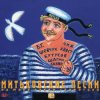








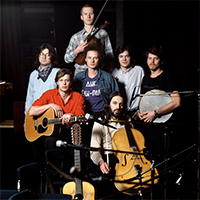
 Аквариум
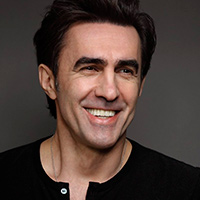
Vyacheslav Butusov is a Soviet and Russian rock musician, singer, composer, guitarist and songwriter, born on October 15, 1961, in Krasnoyarsk. He is the founder and longtime leader of Nautilus Pompilius, and later formed the band U-Piter and the project Orden Slavy. His creative career spans more than four decades, from the Sverdlovsk new wave of the 1980s and guitar-driven rock of the 1990s to chamber, symphonic and choral works.
The central chapter in Butusov’s career is connected with Nautilus Pompilius. It was with this band that songs such as «Скованные одной цепью», «Взгляд с экрана», «Я хочу быть с тобой», «Последнее письмо», «Прогулки по воде», «Титаник», «Дыхание» and «Крылья» became part of the Russian rock repertoire. At the same time, the authorship of the band’s classic material should be distinguished carefully: Butusov primarily wrote the music and performed the songs, while the lyrics to a large part of the best-known material were written by poet Ilya Kormiltsev. In the early repertoire, lyrics were also written by Butusov himself and Dmitry Umetsky.
Full name: Vyacheslav Gennadyevich Butusov
Date of birth: October 15, 1961
Place of birth: Krasnoyarsk, Russian SFSR, USSR
Main projects: Nautilus Pompilius, U-Piter, Orden Slavy
Occupation: musician, singer, composer, songwriter, writer
Instruments: vocals, guitar
Main genres: rock, post-punk, art rock, alternative rock
Childhood in Siberia and the move to Sverdlovsk
Butusov was born in Krasnoyarsk and spent his early years near the Bugach railway station. His father worked in transport construction, so the family moved several times. The future musician grew up in different Siberian cities, including Khanty-Mansiysk and Surgut. Sverdlovsk became his permanent home only during his final years of school.
After finishing school, Butusov entered the Sverdlovsk Architectural Institute. Architecture was not merely a formal episode in his biography: he completed his education and worked in the profession for some time, including taking part in the design of the Sverdlovsk Metro.
But it was also at the institute that he made the most important musical acquaintance of his early career. During his first year, Butusov met Dmitry Umetsky, who played bass guitar. They listened to rock music, studied other artists’ songs, tried writing their own material and played in a student group. This partnership gradually developed into a band initially called simply Nautilus and later renamed Nautilus Pompilius.
The first Nautilus Pompilius recordings
The history of Nautilus Pompilius is generally traced back to the early 1980s. In 1983, Butusov and Umetsky recorded Переезд, an early album still quite distant from the sound with which the band would become associated several years later. The musicians were searching for their own musical language, combining Western rock influences with the songwriting tradition of the Sverdlovsk scene.
Around the same period, Butusov met poet and translator Ilya Kormiltsev. Their collaboration did not immediately become a permanent songwriting partnership. One of the first Nautilus Pompilius songs based on his lyrics was «Кто я?», included on the 1985 album Невидимка.
The meeting proved decisive for the band’s later history. Butusov and Kormiltsev developed an unusual working model for rock music: music and lyrics often existed as independent elements before being brought together in a song. Kormiltsev introduced a language in which social satire coexisted with literary imagery, absurdism, parable and ambiguity. Butusov found melodic forms for those poems.
Разлука and the birth of the major Nautilus Pompilius
The true breakthrough came in the summer of 1986. The album Разлука was recorded in Sverdlovsk, and after its release Nautilus Pompilius ceased to be merely a notable local band.
The recording featured Butusov, Dmitry Umetsky, keyboardist Viktor Komarov and saxophonist Alexey Mogilevsky. The result was a sound highly characteristic of its time yet immediately recognizable: drum machine, synthesizers, saxophone, bass, relatively economical guitar parts and Butusov’s restrained vocals.
Разлука included «Эта музыка будет вечной», «Казанова», «Взгляд с экрана», «Хлоп-хлоп», «Шар цвета хаки», «Наша семья» and «Скованные одной цепью». Kormiltsev wrote most of the lyrics, although several songs were written by Butusov himself.
The contrast between the music and the words was particularly striking. The band could play almost dance-oriented new wave while the lyrics dealt with conformity, depersonalization, closed domestic environments or social pressure. Butusov, meanwhile, did not attempt to turn the concert into a theatrical rock manifesto. His stillness, calm vocal manner and detachment were just as effective as overt stage expression.
Following appearances at festivals organized by the Sverdlovsk Rock Club, the band’s popularity quickly spread beyond the Urals. In 1987–1988, Nautilus Pompilius toured extensively across the USSR and became one of the most in-demand acts of the new Soviet rock scene.
«Я хочу быть с тобой», «Последнее письмо» and the first band crisis
By the late 1980s, the Nautilus repertoire continued to expand. During this period, songs such as «Я хочу быть с тобой», «Доктор твоего тела», «Стриптиз», «Последнее письмо» and other compositions appeared, some of them released by the Melodiya label on the record Князь тишины.
«Последнее письмо» later became much better known under the unofficial title «Гудбай, Америка!», although in the original discography the song is titled precisely «Последнее письмо».
Enormous popularity did not resolve internal disagreements. Butusov and Umetsky had different ideas about the band’s future development. In 1988, Umetsky left the main line-up, and soon afterwards Butusov dissolved the existing live version of the group.
An attempt to work together again led to material being recorded for the project Человек без имени. It was intended to be connected with a film of the same name, but the film was never made. The collaboration between Butusov and Umetsky ended again, while the album, recorded back in 1989, was officially released much later.
The St Petersburg period: a different Nautilus Pompilius
At the turn of the 1980s and 1990s, Butusov moved to Leningrad and assembled a new version of Nautilus Pompilius. The band gradually moved away from the keyboard-and-saxophone aesthetic of the Sverdlovsk line-up. Guitar became central to the sound.
The line-up changed frequently, but over the years important roles were played by guitarists Alexander Belyaev, Yegor Belkin and Nikolai Petrov, bassist Igor Kopylov and drummer Albert Potapkin. Alexey Mogilevsky later returned to the band.
The changes in personnel also affected the music itself. While Разлука was primarily associated with new wave, the Nautilus Pompilius of the 1990s sounded harder and considerably closer to guitar rock. Kormiltsev’s poetry also changed. Direct social irony increasingly gave way to religious imagery, mythology, internal conflicts, parables and themes of choice.
At the beginning of the decade, the albums Наугад, Родившийся в эту ночь and Чужая земля appeared. The latter became one of the most important records of the mature Nautilus Pompilius period. It included «Прогулки по воде», «На берегу безымянной реки», «Чужая земля» and «Эти реки».
«Прогулки по воде» is especially representative of the Butusov-Kormiltsev method. The song is structured as an imagined conversation between the Apostle Andrew and Christ, but it is not a retelling of a Gospel story. Kormiltsev used the religious image as an artistic parable, while Butusov’s calm melody turned it into one of the band’s most recognizable songs.
Титаник and Крылья
In 1994, Титаник was released. The material was noticeably more cohesive and focused than many earlier works from the period of constant line-up changes. The album included «Тутанхамон», «Титаник», «Воздух», «Колёса любви», «Утро Полины» and «Зверь».
The next major work, Крылья, was recorded in St Petersburg in 1995 and released in early 1996. The title track became one of the most important late-period Nautilus Pompilius songs. The same album also contains «Дыхание», «Железнодорожник», «Золотое пятно» and «Кто ещё».
By that time, the group had changed dramatically compared with the Nautilus of the Разлука era. Butusov’s voice, his music and the creative partnership with Kormiltsev remained constant. Almost everything else — the line-up, arrangements, overall timbre and stage presentation — had changed repeatedly.
Яблокитай and the end of Nautilus Pompilius
The band’s final fundamentally new studio work was Яблокитай. The album was recorded in late 1996 at Fairview Studio in the United Kingdom. English musician and producer Bill Nelson took part in the sessions, while Boris Grebenshchikov appeared on several tracks.
Яблокитай stands apart within the Nautilus Pompilius discography. The group’s then-current touring line-up was largely absent from the sessions; most of the musical work was carried out by Nelson together with Butusov. The lyrics were once again written by Kormiltsev.
By the time the album appeared, Butusov had already decided to end the band’s history. The farewell programme was titled «Последнее плавание». On June 14, 1997, Nautilus Pompilius played its final official concert in Yekaterinburg.
Afterwards, the name was occasionally used in anniversary and retrospective contexts, musicians from different line-ups reunited for individual performances, and Butusov continued to perform the old repertoire. However, Nautilus Pompilius was never restored as a permanent band after 1997.
Butusov and the film Brother
A separate chapter connects Butusov’s music with director Alexei Balabanov. They had known each other since Sverdlovsk, and songs by Nautilus Pompilius played an important role in the 1997 film Brother.
For the film’s protagonist Danila Bagrov, Nautilus is his favourite band, so the music exists not only outside the action as soundtrack material but also within the story itself. Butusov appeared in the film as himself. Several Nautilus Pompilius songs are heard in the film, and a scene involving the filming of a music video is connected with the song «Крылья».
Later, music by Butusov and related projects was also used in other Balabanov films. For Brother 2, one of the selected songs was «Гибралтар-Лабрадор», performed by Butusov as part of Boris Grebenshchikov’s Terrarium project. The musician also participated in work on the music for the films War and Dead Man’s Bluff.
After Nautilus: searching for a new format
After dissolving the band, Butusov did not simply create a copy of it under another name. The late 1990s and early 2000s became a period of varied experimentation.
In 1998, he released the solo album Овалы. In 2000, together with the group Deadушки, he recorded Элизобарра-торр, a work in which Butusov’s voice and melodic style existed within an electronic environment. He also participated in Boris Grebenshchikov’s Terrarium project.
His work with Kino guitarist Yuri Kasparyan gradually led Butusov to his next permanent band.
U-Piter: Butusov and Yuri Kasparyan
U-Piter was formed in St Petersburg in 2001 by Vyacheslav Butusov and Yuri Kasparyan. The original line-up also included Oleg Sakmarov and drummer Yevgeny Kulakov.
Kasparyan’s presence inevitably connected the new band with the musical legacy of Kino, but U-Piter was not conceived as a reconstruction of either Kino or Nautilus Pompilius. Butusov wrote new material, while Kasparyan’s distinctive guitar language became an important element of the group’s sound.
The first full-length album, Имя рек, was released in 2003. A year later came Биографика. It included «Песня идущего домой» and «Девушка по городу», two of U-Piter’s most recognizable songs.
After a four-year break, the band released Богомол in 2008, followed by Цветы и тернии in 2010. The latter contained an unusual work within Butusov’s discography, «Дети минут»: the lyrics had been written by Viktor Tsoi in the late 1980s, while Butusov composed the music two decades later. Kasparyan performed the guitar part.
U-Piter’s fifth and final studio album was Гудгора, released in 2015. By that point, the band had already existed significantly longer than most individual Nautilus Pompilius line-ups.
In February 2017, U-Piter came to an end. The group had lasted for around sixteen years and left behind five principal studio albums: Имя рек, Биографика, Богомол, Цветы и тернии and Гудгора.
Returning to Kormiltsev’s legacy
After U-Piter, Butusov increasingly returned to his own musical past, though not by literally restoring former line-ups.
In 2017, he recorded Гудбай, Америка!, an album of newly arranged Nautilus Pompilius songs prepared for the band’s 35th anniversary. It included «Эта музыка будет вечной», «Взгляд с экрана», «Казанова», «Титаник», «Дыхание», «Скованные одной цепью», «Я хочу быть с тобой», «Последнее письмо» and other works.
The same year also saw the release of Иллюминатор, a separate project based on poems by Ilya Kormiltsev. For Butusov, it became a continuation of his work with the poet’s legacy many years after Kormiltsev’s death.
This approach became characteristic of Butusov’s later period: older songs do not simply return to the concert setlist, but receive new arrangements — electric, acoustic, chamber or symphonic.
Orden Slavy
Butusov’s next permanent band was named Orden Slavy. The group’s first album, Аллилуия, was released in 2019.
On this record, Butusov acted not only as vocalist and composer, but also as the principal lyricist. The electric parts were recorded in Moscow, while symphonic instruments and a children’s choir were used in several arrangements. The programme included «Идиот», «К Ангелам», «Дети сидят в интернете», «Если я стану рыбой», «Аллилуия, София!» and other songs.
The use of classical musicians was not a one-off experiment for a single album. Even before Orden Slavy appeared, Butusov had worked with pianist Ekaterina Mechetina and the Academic Youth Choir of St Petersburg Television and Radio on the music-theatre programme Пробуждённая радость. Older rock compositions were reimagined there as chamber works.
In 2020, Butusov and Mechetina released the instrumental album ChiaroScuro. It is one of the works that most clearly demonstrates how far his later music had moved beyond the conventional rock-band format.
Плач Адама and Мертвец
In the 2020s, Butusov continued to combine rock with large-scale academic forms. The result of several years of work was the symphonic cycle Плач Адама, based on biblical imagery.
An album version of the project appeared in 2025. The recording featured the Leningrad Region Tavrichesky Symphony Orchestra conducted by Mikhail Golikov and the Academic Youth Choir of St Petersburg Television and Radio under Igor Gribkov.
Also in 2025, Butusov and Orden Slavy released their second studio album, Мертвец. It included «На небе всегда кто-то есть», «Мертвец», «О чём молчат деревья», «Город», «Голос воды», «Родом из Рая», «Ниспошли», «Начало», «Три сестры» and «Война и мир».
In 2026, the song «Серафим» appeared, with both music and lyrics written by Butusov. The track was recorded with a choir conducted by Igor Gribkov. By this point, working with choral and symphonic sound had clearly become a stable part of Butusov’s later period rather than an occasional departure from rock.
Literature, drawing and other work
Butusov’s creative activity is not limited to music. His architectural education and interest in graphic art and literature have repeatedly found expression in his projects.
In 2007, the book Виргостан was published, combining literary prose with the author’s own play with language. The same year, together with Nikolai Yakimchuk, Butusov released Антидепрессант. Со-Искания. In 2011, Архия followed.
Butusov has also worked in illustration. His visual work does not appear to be a separate hobby disconnected from music: graphics, album artwork, stage projects and prose all exist within the same imaginative world as his songs.
How Butusov’s songs are constructed
Butusov’s work cannot be reduced to a single genre. Nautilus Pompilius in the mid-1980s was primarily new wave and post-punk built around keyboards, saxophone and drum machine. The band of the 1990s became guitar-driven and at times considerably heavier. U-Piter continued the guitar-based direction with Kasparyan’s distinctive style. Butusov’s later works include electronic music, piano arrangements, symphonic orchestra and choir.
Despite all these changes, his melodic style remained recognizable. Butusov rarely builds a song around demonstrative vocal technique. His voice works differently: short phrases, restrained delivery, pauses, repetition and intonation are often more important than range. This contrast made Kormiltsev’s image-rich lyrics especially expressive.
It is equally important to distinguish between two songwriting periods. Classic Nautilus Pompilius was largely the result of the Butusov-Kormiltsev tandem: one wrote the music, the other the lyrics. After the band dissolved, Butusov increasingly wrote lyrics himself and also turned to texts by other authors, from Alexander Pushkin and Daniil Kharms to Viktor Tsoi.
Main stages of the discography
The Nautilus Pompilius discography includes Переезд (1983), Невидимка (1985), Разлука (1986), Князь тишины (1989), Наугад (1990), Родившийся в эту ночь (1991), Чужая земля (1992), Титаник (1994), the album Человек без имени, recorded in 1989, as well as Крылья and Яблокитай (1997). After the band ceased activity, the archival collection Атлантида was also released.
U-Piter’s main discography consists of Имя рек (2003), Биографика (2004), Богомол (2008), Цветы и тернии (2010) and Гудгора (2015).
Outside those two groups, Butusov released or participated in projects including Овалы, Элизобарра-торр, Модель для сборки, Kharms FM, Иллюминатор, Гудбай, Америка!, ChiaroScuro and other works. With Orden Slavy, he recorded Аллилуия (2019) and Мертвец (2025), while the symphonic cycle Плач Адама has developed as a separate line of work.
Vyacheslav Butusov today
After the end of Nautilus Pompilius, Butusov did not abandon its repertoire. The band’s songs continue to make up a substantial part of his concert programmes and regularly receive new arrangements. At the same time, present-day performances under the programme title Nautilus Pompilius should not be confused with a restoration of the historical band: Butusov performs this legacy with musicians from his current line-up.
By the mid-2020s, he was simultaneously working with a rock band, choir and symphonic musicians, releasing new material and continuing concert programmes built around songs from different periods. A single performance can bring together compositions from Разлука, material from U-Piter and works written almost forty years after the earliest Nautilus Pompilius recordings.
This continuity best describes Butusov’s place in the history of Russian-language rock music. His career did not end with the band that made him famous. Nautilus Pompilius became an independent chapter in music history, U-Piter formed the next major stage, and his later projects brought him into chamber and symphonic music while preserving a connection with songs first written on the Sverdlovsk scene of the 1980s.