



 Ирина Билык
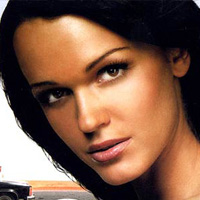
Slava (real name — Anastasia Vladimirovna Slanevskaya; born May 15, 1980, in Moscow) is a Russian singer, songwriter, television presenter and actress. She has been performing professionally since the early 2000s. She became widely known for songs including «Попутчица» (Fellow Traveler), «Одиночество» (Loneliness), «Расскажи мне, мама» (Tell Me, Mom), «Я и ты» (You and I), «Первая любовь — любовь последняя» (First Love Is the Last Love), «Однажды ты» (One Day You), «Подруга» (Girlfriend) and «Без тебя меня нет» (Without You, There Is No Me).
The core of Slava’s repertoire is Russian-language pop music, at different stages incorporating elements of estrada, pop rock and Russian chanson. Her songs often revolve around familiar personal situations — breakups, jealousy, loneliness and difficult relationships with loved ones. Dramatic lyrics are frequently set against relatively energetic arrangements. One of the clearest examples is «Одиночество» (Loneliness), one of the defining songs of her career.
Childhood and early years
Anastasia’s father, Vladimir, worked as a driver, while her mother, Ekaterina, was an economist. There were no professional musicians in her immediate family, although her grandmother performed with the Pyatnitsky Choir.
As a child, Anastasia Slanevskaya was interested in sports and was particularly fond of volleyball. She did not receive a formal musical education. After finishing school, she tried studying in several different fields, but none of them became her profession.
Before entering the music industry, the future singer worked in a number of different jobs, including as an administrator and interior designer. For a long time, music remained more of a personal interest: Anastasia often sang karaoke and had no plans to turn singing into a career.
Sergey Kalvarsky and the birth of Slava
In the spring of 2002, television director Sergey Kalvarsky, who had worked with major Russian artists, heard Anastasia Slanevskaya singing in a Moscow karaoke club.
He invited her to try pursuing a professional music career. Oleg Chelyshev was also involved in developing the new project.
The singer was given the short stage name Slava. One of her first notable recordings was «Люблю или ненавижу» (Love or Hate). The song and its music video appeared before her debut album and introduced the new performer to a broad television audience.
The track was later nominated at the 2004 MTV Russia Music Awards.
«Попутчица» and the debut album
Slava’s first major hit was «Попутчица» (Fellow Traveler), written by Viktor Drobysh.
The song suited Slava’s voice particularly well — low, slightly husky and immediately recognizable. It received substantial radio airplay and ultimately gave its name to her debut album.
On November 16, 2004, Slava released «Попутчица» (Fellow Traveler). In addition to the title track, the album included «Люблю или ненавижу» (Love or Hate), «Огонь-вода» (Fire and Water), «Не было» (It Never Happened), «Странный город» (Strange City), «Без правил» (No Rules), «Лейся, ночь» (Flow, Night), «Игра в четыре руки» (Four-Hand Game) and «Моей душе покоя нет» (My Soul Knows No Peace).
The album already established the foundation of Slava’s later repertoire: accessible Russian-language melodies, emotionally direct relationship stories and a vocal style in which expression and phrasing mattered more than technical showmanship.
Eurovision selection and the album «Классный»
In 2005, Slava attempted to reach an international audience by taking part in Russia’s national selection for the Eurovision Song Contest with the English-language song «I Wanna Be the One».
She finished third in the third semifinal and advanced to the final, where she placed ninth. Russia was ultimately represented in Kyiv by Natalia Podolskaya with «Nobody Hurt No One».
Her next studio album arrived in 2006. «Классный» (Cool) was more stylistically varied than her debut, with a greater presence of electronic elements, guitars and club-oriented production.
Notable tracks included «Дорога белая» (White Road), «Классный» (Cool) and «Украла улыбку» (Stole a Smile). By this point, Slava was already a regular presence on radio, television and major concert stages.
«Paragraph 78»
In the mid-2000s, Slava also tried her hand at acting.
In Mikhail Khleborodov’s science-fiction action film «Paragraph 78», she played one of the central characters, a special-forces operative nicknamed Lisa. The film was released in two parts in 2007.
Her co-stars included Gosha Kutsenko, Vladimir Vdovichenkov, Grigory Siyatvinda and Anatoly Bely. Slava also recorded the song «В небо» (Into the Sky) for the project.
She did not go on to pursue a full-scale parallel film career, and music remained her primary focus.
«Одиночество»
A new stage in Slava’s career began with «Одиночество» (Loneliness), a song many listeners recognize from its memorable refrain built around the phrase «Одиночество — сволочь» (“Loneliness is a bastard”).
Slava created the song together with Viktor Drobysh. It appeared several years before the album of the same name and quickly became one of the biggest hits of her career.
Musically, it is a relatively energetic pop track, although the story at its center is anything but dance-oriented: a painful breakup, emotional emptiness and an attempt to cope with loneliness. That contrast helped make the song especially distinctive.
«Одиночество» earned Slava a Golden Gramophone award and a MUZ-TV Award.
«Я и ты» and a more mature pop direction
In 2011, Slava recorded the duet «Я и ты» (You and I) with Stas Piekha.
The song also received a Golden Gramophone and fit naturally into the direction that was gradually becoming central to Slava’s music: fewer club-pop elements and more mature, dramatic pop songwriting.
In May 2013, she released her third studio album, «Одиночество» (Loneliness). The record brought together material from several preceding years, including «Одиночество», «Я и ты», «Расскажи мне, мама» (Tell Me, Mom), «Крик души моей» (Cry of My Soul), «Стань сильней» (Become Stronger) and other songs.
«Расскажи мне, мама» (Tell Me, Mom) became another major hit and received a Golden Gramophone in 2013.
Duet with Irina Allegrova
Also in 2013, Slava recorded «Первая любовь — любовь последняя» (First Love Is the Last Love) with Irina Allegrova.
The duet is built around the contrast and interplay of two recognizable low female voices against a dramatic pop arrangement. The song quickly became part of both singers’ concert repertoires.
In 2014, «Первая любовь — любовь последняя» received a Golden Gramophone.
«Откровенно»
In October 2015, Slava released her fourth studio album, «Откровенно» (Frankly).
The record brought together several strands of her repertoire: traditional pop music, dramatic ballads and collaborations.
Among its most notable songs were «Спелый мой» (My Ripe One), «Однолюб» (One-Love Man), «Первая любовь — любовь последняя», the Lyubov Uspenskaya duet «Таблетка» (Pill), and «Дружба» (Friendship) with Denis Klyaver.
Some of this material moved closer to contemporary Russian estrada and chanson, especially in its lyrical themes and delivery. However, describing Slava simply as a chanson singer would be inaccurate: pop music remains the foundation of her catalog.
«Красный», «Однажды ты» and television
During the second half of the 2010s, Slava continued releasing standalone singles between albums.
In 2016, she released «Красный» (Red), followed a year later by «Однажды ты» (One Day You). The latter earned her another Golden Gramophone in 2018.
At the same time, Slava appeared in entertainment television projects. In 2015, she competed on the Russian version of «Dancing with the Stars», and in 2017 she took part in the music show «Three Chords».
«Крик души»
On November 29, 2019, Slava released her fifth studio album, «Крик души» (Cry of the Soul).
By this stage, her musical identity no longer depended on sharp stylistic reinvention. The focus was firmly on her voice, melody and emotionally direct lyrics.
The album era included «Однажды ты», «Твой поцелуй» (Your Kiss), «Слёз умытая печаль» (Sorrow Washed in Tears) and other songs.
The title «Крик души» also describes much of Slava’s later repertoire particularly well: her songs rarely hide emotion behind elaborate metaphors and more often express it directly.
«Подруга» and «Без тебя меня нет»
In 2020, Slava released «Подруга» (Girlfriend).
The song received a Golden Gramophone and was later included on the album «СЛАВА».
In 2021, she followed it with «Без тебя меня нет» (Without You, There Is No Me), another song honored with the same award.
Both recordings continued a well-established formula: conversational titles, recognizable human situations and choruses that state the song’s central emotion immediately and directly.
«Бумеранг», «Улетела» and new collaborations
In 2022, Slava and Anna Semenovich released the duet «Бумеранг» (Boomerang). The song received a Golden Gramophone and was later included on Slava’s sixth studio album.
Around the same period, Slava recorded a new version of «Улетела» (Flew Away) with Diskoteka Avariya.
By then, collaborations had become a regular part of her catalog. Irina Allegrova, Stas Piekha, Lyubov Uspenskaya, Denis Klyaver, Anna Semenovich and other artists have appeared alongside Slava on songs with widely differing moods and styles.
«Дочка-мама»
In 2023, Slava released «Дочка-мама» (Daughter and Mother), written by Denis Klyaver.
The song explores the relationship between a mother and her adult daughter. By this point, family themes had become increasingly prominent in Slava’s repertoire alongside her familiar stories of love and separation.
Other releases during the year included «Ты услышишь меня» (You Will Hear Me), the Natan duet «Ой всё» (Oh, Whatever), and the December single «На грани нервного срыва» (On the Verge of a Nervous Breakdown).
The album «СЛАВА»
On September 23, 2024, Slava released her sixth studio album, «СЛАВА» (SLAVA).
It contains eleven tracks:
- «Ты услышишь меня» (You Will Hear Me);
- «Дочка-мама» (Daughter and Mother);
- «Голодная любовь» (Hungry Love);
- «В сердце бьёт молния» (Lightning Strikes the Heart);
- «По горячим следам» (Hot on the Trail);
- «Бумеранг» (Boomerang) — with Anna Semenovich;
- «Ковчег» (Ark);
- «Подруга» (Girlfriend);
- «На грани нервного срыва» (On the Verge of a Nervous Breakdown);
- «Ой всё» (Oh, Whatever) — with Natan;
- «Без тебя меня нет» (Without You, There Is No Me).
The album combines songs released over the course of several years with new material. There is no radical stylistic shift: it is contemporary Russian-language pop built around Slava’s distinctive voice.
For «Ты услышишь меня» (You Will Hear Me), the singer received a Golden Gramophone in 2024.
Songs released in 2025–2026
After «СЛАВА», Slava returned to a singles-focused release strategy.
On April 10, 2025, she released «Летом и зимой» (In Summer and Winter). It was followed by «Девушки не заграничные» (Girls Aren’t Foreign) with Anna Semenovich, «Мы разные» (We Are Different) and other recordings.
On November 7, Slava released «Факт» (Fact). The music was written by Alexander Ivanov, with lyrics by Inna Rakhmanina.
On August 28, 2026, she released «Короче стрижку» (A Shorter Haircut), with music by Timur Yolchin. The title coincided with a noticeable change in the singer’s appearance: in 2026, Slava began wearing her hair short.
As of September 2026, «Короче стрижку» is Slava’s most recent standalone release.
Slava’s musical style
Russian-language pop remains the foundation of Slava’s catalog.
Her early albums featured more dance-pop, electronic production and pop-rock elements. Beginning with «Одиночество», the emphasis gradually shifted toward more mature, dramatic pop — songs in which storytelling and vocal phrasing matter more than experimental production.
Some tracks come close to Russian chanson, particularly in their subject matter and emotional delivery. Slava has repeatedly received Chanson of the Year awards, although this represents only one side of her repertoire.
Her most distinctive vocal characteristic is a low, recognizable timbre combined with an almost conversational delivery in the verses. Slava rarely builds songs around complex vocal technique. Instead, tension usually develops gradually before reaching its emotional peak in the chorus.
The titles often speak for themselves: «Одиночество» (Loneliness), «Расскажи мне, мама» (Tell Me, Mom), «Однолюб» (One-Love Man), «Подруга» (Girlfriend), «Без тебя меня нет» (Without You, There Is No Me) and «На грани нервного срыва» (On the Verge of a Nervous Breakdown). It is a direct emotional language that does not require the listener to decode elaborate imagery.
Film and television
Slava’s most significant acting role remains Lisa in the two-part 2007 science-fiction action film «Paragraph 78».
She later appeared in entertainment and television projects, participated in music shows and also worked in voice acting.
She did not pursue a separate film career, however: acting and television have always remained secondary to her music.
Personal life
Slava has two daughters.
Her elder daughter, Alexandra Morozova, was born on January 4, 1999, during Anastasia Slanevskaya’s first marriage to Konstantin Morozov.
From the early 2000s, Slava was in a long-term relationship with businessman Anatoly Danilitsky. The couple were never officially married.
Their daughter Antonina was born on December 24, 2011.
The relationship ended and resumed several times. In late 2022, Slava publicly announced that they had separated; the couple later reconciled. In 2025, the singer again spoke publicly about the relationship coming to an end.
In March 2023, Slava became a grandmother for the first time when her elder daughter Alexandra gave birth to a son, Arseny.
Slava’s studio albums
- 2004 — «Попутчица» (Fellow Traveler)
- 2006 — «Классный» (Cool)
- 2013 — «Одиночество» (Loneliness)
- 2015 — «Откровенно» (Frankly)
- 2019 — «Крик души» (Cry of the Soul)
- 2024 — «СЛАВА» (SLAVA)
Compilation albums
- 2007 — The Best
Awards
Slava has received the Golden Gramophone award numerous times. Songs honored with the award over the years include «Попутчица», «Одиночество», «Я и ты», «Расскажи мне, мама», «Первая любовь — любовь последняя», «Однажды ты», «Подруга», «Без тебя меня нет», «Бумеранг» and «Ты услышишь меня».
«Одиночество» also received a MUZ-TV Award as Song of the Year. Slava has been honored at the Song of the Year festival and has repeatedly received Chanson of the Year awards.
Slava as a pop artist
Over more than two decades on stage, Slava’s sound has gradually moved away from the more dance-oriented and electronic pop of her early albums toward a mature Russian-language pop style. There have been few radical reinventions: her recognizable low voice and emotionally direct songwriting connect the early «Попутчица» with much later songs such as «Подруга», «Без тебя меня нет» and the material on «СЛАВА».
Her best-known songs come from different periods of her career, but many share a similar structure: a recognizable real-life situation, a strong melody and a chorus that states the central emotion as directly as possible. That model remains at the heart of Slava’s repertoire, whether an individual recording leans toward dance-pop, mainstream estrada or Russian chanson.