
 h6itam
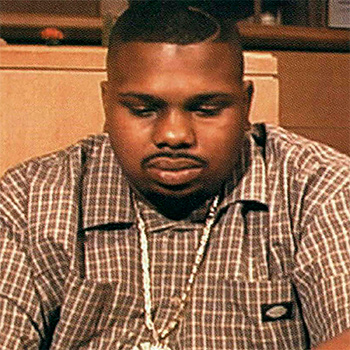
DJ Screw (real name — Robert Earl Davis Jr.; July 20, 1971 — November 16, 2000) was an American DJ, producer and one of the key figures in Houston hip-hop. He was born in Bastrop County, Texas; his childhood and youth were closely connected with Smithville, while his musical career took shape in Houston. DJ Screw developed and popularized the technique known as chopped and screwed — a radically slowed-down sound built around repeated vocal and rhythmic fragments, manipulation of two copies of the same record and distinctive pitch changes. His tapes became the foundation of an independent musical culture in Houston during the 1990s.
Full name: Robert Earl Davis Jr.
Date of birth: July 20, 1971
Place of birth: Bastrop County, Texas, USA
Date of death: November 16, 2000
Place of death: Houston, Texas, USA
Occupation: DJ, producer, mixtape creator
Main genres: Southern Hip-Hop, Houston Rap, Chopped and Screwed
Project: Screwed Up Click
Labels: Screwed Up Records, Bigtyme Recordz
Early years
Robert Davis grew up mainly in Texas, although he also spent some time living with his family in California. His interest in music began long before his professional career: he listened to his family’s record collection and started experimenting with turntables and cassette recording while still a teenager. Among the records he used to learn how to work with vinyl were blues and soul albums owned by his mother.
The future DJ Screw gradually assembled a basic DJ setup from whatever equipment was available and began recording his first homemade mixes onto cassette tapes. His stage name also emerged during this period. According to people close to him, Davis sometimes ruined records he disliked by dragging a metal screw across the grooves. His friend Trey Adkins, later known as Shorty Mac, jokingly called him DJ Screw — and the name stuck.
By the late 1980s, Davis was taking DJing seriously. After moving to Houston, he entered an environment in which an independent Southern rap scene was developing its own themes, performance styles and car-audio culture. Unlike artists trying to reproduce the sound of New York or Los Angeles, Screw gradually developed an approach closely tied to the rhythm and lifestyle of Houston itself.
How chopped and screwed emerged
The basic idea of slowing music down existed before DJ Screw, and other Texas DJs had experimented with record speeds before him. Davis’s innovation was to transform a collection of technical tricks into an independent musical language and build an entire scene around it.
Working with two turntables, Screw could use two copies of the same track. He would significantly reduce the playback speed, making the rhythm heavier and more stretched while lowering the voices. Using the mixer and crossfader, he could then repeat individual words, lines or drum fragments by switching back and forth between the two records. This technique became known as chopping. Slowing the material down became associated with the term screwing.
The finished recording could be processed further while being transferred to cassette. As a result, a familiar rap track could become almost unrecognizable: long spaces appeared between beats, voices dropped in pitch, phrases repeated, and time itself seemed radically stretched. Importantly, DJ Screw did not work exclusively with rap. His collection included recordings by artists from different parts of the United States and from a wide variety of genres, which he incorporated into his own mixes.
Screw Tapes
DJ Screw’s defining body of work was not a single song or studio album, but an enormous series of cassettes known as the Screw Tapes. During the 1990s, they circulated throughout Houston literally from hand to hand. At first, Davis recorded personalized selections for friends and local listeners, but demand eventually became so great that people travelled from different parts of the city and elsewhere in Texas to obtain new tapes.
During his relatively short career, DJ Screw created more than 300 original mixtapes. Some recordings ran for more than an hour, combining music with extended freestyle performances by local rappers. The tapes served several purposes at once: they were DJ mixes, a platform for emerging artists and a kind of audio chronicle of South Houston.
One of the best-known recordings is Chapter 012: June 27th, made on June 27, 1996. Its central section features members of the Houston scene taking turns delivering an extended freestyle over an instrumental reworked by DJ Screw. The recording achieved cult status, and June 27 eventually became an unofficial day of remembrance among fans of Houston rap, celebrating Screw and the culture he created.
Screwed Up Click
A circle of rappers gradually formed around DJ Screw’s home studio and became known as the Screwed Up Click, or S.U.C. It was not a group with a fixed line-up in the conventional sense, but rather a community of performers who appeared on Screw’s tapes, recorded freestyles and helped develop the distinctive sound of South Houston.
Artists closely associated with Screwed Up Click at different times included Fat Pat, H.A.W.K., Lil’ Keke, Big Pokey, Big Moe, E.S.G., Yungstar, Al-D, Lil’ O, Lil’ Flip, members of Botany Boyz and other figures from the local scene. For many of them, appearing on Screw’s tapes was one of the first opportunities to gain widespread recognition within Houston.
The importance of Screwed Up Click extended far beyond the idea of a musical collective. These recordings helped shape Houston rap’s own vocabulary, flow and subject matter — cars fitted with distinctive rims and powerful sound systems, South Houston neighborhoods, everyday street life and local culture. In effect, DJ Screw built an infrastructure around his mixtapes that allowed artists to become known without support from major record companies.
Albums and Screwed Up Records
Although cassette tapes form the core of DJ Screw’s legacy, some of his music also received more conventional commercial releases. Bigtyme Recordz issued All Screwed Up!, releases in the 3 'N the Mornin' series and other recordings. As part of the Dead End Alliance project, which also included Fat Pat, H.A.W.K. and Kay-K, Screw contributed to the album Screwed for Life.
By the late 1990s, demand for his recordings had become so high that DJ Screw moved music sales out of his home and into his own store. Screwed Up Records and Tapes opened in 1998. It became not only a retail outlet but also an important center of Houston rap culture. After the musician’s death, the store continued operating and remained connected with the legacy of Screw and Screwed Up Click.
DJ Screw and syrup culture
Chopped and screwed is often associated with a drink that became common in parts of Houston’s rap scene, known as lean, syrup or purple drank — a mixture of a soft drink with prescription cough syrup containing codeine. The connection did exist: the use of codeine syrup was repeatedly referenced in lyrics by members of Screwed Up Click and in the titles of some recordings.
However, describing chopped and screwed as a style deliberately created under the influence of codeine would be an oversimplification. Davis’s experiments with turntables, playback speed and cassette recording grew primarily out of DJ practice. Later, Screw’s unusually slow sound became closely associated with the local culture and lifestyle of South Houston, where syrup use had also become part of the scene during the 1990s.
Death of DJ Screw
On November 16, 2000, DJ Screw was found dead in Houston. He was 29 years old. According to the Harris County medical examiner, the cause of death was a codeine overdose combined with intoxication from other substances. His death came at a time when the sound he had created had already become one of the defining characteristics of Houston hip-hop and was gradually spreading beyond Texas.
Influence on hip-hop
DJ Screw did more than introduce a new way of remixing records. He changed perceptions of how radically a DJ could transform source material. Slowing the music ceased to be a single effect and became the central compositional principle: rhythm, vocal timbre, the emotional impact of lyrics and even the perceived duration of musical time were all altered.
His approach became one of the defining features of Houston rap and had a significant influence on later generations of artists and producers. Elements of chopped and screwed were eventually used by musicians far beyond Texas, while the slowed-down aesthetic entered mainstream hip-hop, R&B and experimental electronic music. At the same time, Screw’s original school remains a distinct tradition with its own techniques and cultural context, rather than simply a general label for any slowed-down track.
His model for distributing music was equally important. DJ Screw built his reputation largely without the support of the major music industry: he recorded music at home, sold cassettes himself and gathered local artists around his studio. In this sense, the Screw Tapes document not only the work of a single DJ but an entire era of independent Houston hip-hop.
Legacy
DJ Screw’s archive is preserved in the special collections of the University of Houston Libraries. It includes personal documents, photographs, working materials, equipment, recordings and a substantial part of his vinyl collection. Researchers of Houston music culture regard these materials as an important resource for studying the history of regional hip-hop.
Decades after DJ Screw’s death, his music continues to define perceptions of the classic Houston sound. The Screw Tapes are reissued and preserved digitally, June 27 is commemorated each year by fans of his legacy, and the chopped and screwed technique has long since spread beyond the city where it emerged.
DJ Screw’s greatest achievement was not simply slowing down other artists’ recordings. He created a recognizable musical system in which speed, repetition and pitch manipulation became expressive tools in their own right. Through his work, Houston developed a sound of its own, and the term chopped and screwed entered hip-hop history as one of the most distinctive DJ traditions of the American South.